Estimate usage for your first inbound phone agent
Choose the first job for the line, then use your own call history to see how that job might use minutes and texts.
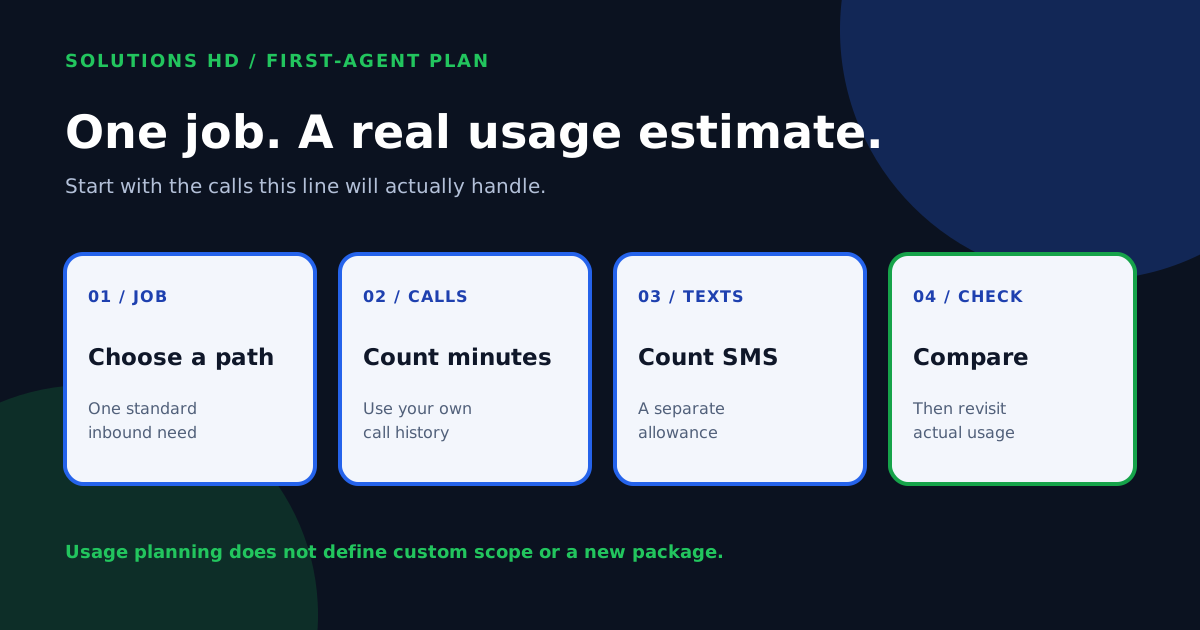
A ready-made inbound agent is easiest to evaluate when it has one clear starting job: answer routine reception calls, handle appointment inquiries, or cover an after-hours line. Once you know that job, you can estimate the call volume it will actually carry. That gives you a more useful buying conversation than choosing from a catalog on features alone.
Solutions HD's standard AI Phone Agent subscription is $249 per month, month to month, with 500 inbound minutes and 500 SMS in each billing period. Extra usage is billed at $0.15 per additional minute and $0.03 per additional SMS. This article explains how to plan against those published terms; it does not define a new package or claim that every custom request is in the standard scope.
Pick the first job before estimating usage
Ask which calls you want the initial flow to handle. A reception line may have many brief “where are you?” questions. A booking line may involve fewer but longer conversations. An after-hours path may carry a different mix from the daytime line. These are planning categories, not a promise of a particular catalog package or call length.
Use the first-job guide if you have not made that choice. Then pull recent call logs for the part of the line you expect to use. Count inbound calls, note a reasonable range of durations, and separately estimate SMS messages that your approved flow may use.
Calculate minutes and texts separately
Multiply call count by average handled minutes for the selected job. Compare the result with the 500-minute allowance. Repeat for SMS and its separate 500-message allowance. If either estimate is above 500, multiply only the excess by the corresponding overage rate. Use a low and high range if your records are incomplete.
| First-job scenario | Estimated inbound minutes | Estimated SMS | Base plus estimated overage |
|---|---|---|---|
| Brief reception questions | 180 calls × 2 minutes = 360 | 300 | $249; both estimates are within the allowances |
| Longer appointment conversations | 150 calls × 4 minutes = 600 | 560 | $249 + (100 × $0.15) + (60 × $0.03) = $265.80 |
Neither row is a Solutions HD customer, performance result, or forecast. Real billing follows measured usage in the billing period. If your line receives a different mix of calls, use your own counts instead of these examples.
Keep scope and volume as separate decisions
Usage math does not tell you whether a ready-made flow fits the actual call. If the first job needs unusual exceptions or nonstandard integration, discuss that separately rather than assuming it is included because the minute estimate fits. The ready-made versus custom guide helps frame that fit question. Do not treat the standard subscription price as a quote for unapproved custom work.
There is no setup or onboarding fee for the standard phone subscription. A sales agent helps establish the initial flow from your business information and call-handling guidance. Later changes can be made in the platform, with support available when you need help. Confirm the selected job and actual configured path during setup.
Check actual use after launch
Once a billing period has finished, compare real inbound minutes and SMS with the planning range. If the mix differs from what you expected, update the estimate before the next period. To prevent the next monthly renewal, cancel before the current billing period ends; service remains available through the paid period, and overages already incurred remain due. See the full terms.
Review how Solutions HD works, or talk through the first job and call volume with the team.